Vitamin B12: what it does, who looks for it, and why 1000 mcg shows up on labels
By Melt Daily ·
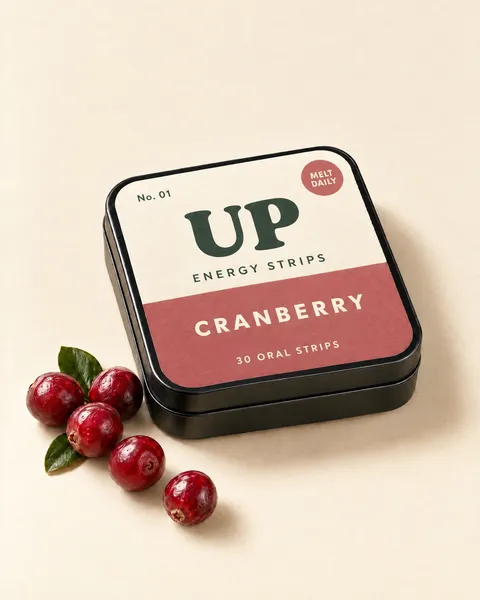
Vitamin B12 is in a lot of energy products, including our UP strip. It is also one of the vitamins with the most eye-catching numbers on a label. Here is what B12 does, where it comes from, and how to make sense of a %DV in the tens of thousands.
What vitamin B12 does
Vitamin B12, also called cobalamin, is a water-soluble B vitamin. The body uses it in normal energy metabolism, in the formation of red blood cells, in DNA synthesis and in normal nervous system function. That role in energy metabolism is why B12 often appears in energy formulas. It is worth being clear: B12 is not a stimulant. It does not work like caffeine.
Where B12 comes from
B12 is found naturally in animal foods: meat, fish, poultry, eggs and dairy. It is also added to some fortified foods, like certain breakfast cereals and plant milks, and to nutritional yeast. Because plant foods do not naturally contain it, people who eat a vegan diet are commonly advised to get B12 from fortified foods or a supplement.
The NIH Office of Dietary Supplements also notes that older adults, and people taking certain medications such as metformin or acid-reducing medicines, may absorb less B12 from food.
Methylcobalamin vs. cyanocobalamin
You will see two main forms on supplement labels. Cyanocobalamin is a stable, widely used form. Methylcobalamin is one of the forms that occurs naturally in the body. Our UP strip uses methylcobalamin. Both forms are used to provide vitamin B12, and the body can make use of either.
Why the %DV is so high
The Daily Value for B12 is only 2.4 mcg, so 1000 mcg works out to 41,667% DV. That number looks alarming, but there is a reason supplements use it. The body absorbs only a small fraction of a large oral dose of B12. The NIH notes, for example, that only about 1.3% of a 1000 mcg oral dose is absorbed through the mechanism that works independently of the stomach's intrinsic factor.
The NIH has not set an upper limit for B12 because of its low potential for harm at the amounts found in food and supplements. As always, if you take medication or have a health condition, check with your doctor.
What is in one UP strip
- Vitamin B12 (as methylcobalamin): 1000 mcg
- Caffeine (from green tea): 50 mg
- L-theanine: 30 mg
So UP is both a B12 strip and a light caffeine strip. If you want B12 without caffeine, note that UP is not the right fit; its caffeine is about half a cup of coffee.
When to take it
Because UP contains caffeine, most people take it in the morning or early afternoon, the same time they might otherwise reach for coffee or tea. Keeping caffeine away from the evening makes it easier to fall asleep.
If you are pregnant, nursing, taking any medication or managing a health condition, check with your doctor or pharmacist before adding a supplement.
*These statements have not been evaluated by the Food and Drug Administration. These products are not intended to diagnose, treat, cure, or prevent any disease.