Supplement strips vs. pills and gummies: an honest comparison
By Melt Daily ·
Strips, capsules and gummies can all hold the same kinds of vitamins and botanicals. They differ in how you take them, how much they can carry, and what comes along for the ride. Here is a plain look at each one, including the places where a strip is not the best choice.
Three formats, one goal
A capsule or tablet is a measured amount of an ingredient packed into something you swallow with water. A gummy is a chewable candy-style base, usually gelatin or pectin, with the ingredient mixed in. A dissolvable strip, sometimes called an oral thin film, is a thin sheet about the size of a postage stamp that you set on your tongue and let melt.
None of these is magic. The format does not change what an ingredient is. What the format changes is the experience of taking it every day, and for most people that is the part that decides whether a routine sticks.
Convenience and no water
The biggest difference is water. A capsule needs a drink to go down. A gummy needs chewing. A strip needs neither: you peel open a sachet, place the strip on your tongue and it dissolves in under a minute. That makes it easy to take at a desk, in the car before you start driving, between classes, or on a plane where the drink cart is a long way off.
Strips also skip the swallowing step entirely, which matters to a lot of people. Some adults simply do not like swallowing pills, and a large tablet can feel like a chore every single morning. If that sounds like you, a strip removes the part of the routine you were most likely to skip.
Portability
A bottle of capsules rattles around a bag, and a jar of gummies can soften and stick together in a warm car. Strips come sealed in flat single-serve sachets, so a month of them fits in a slim tin that slides into a pocket or a jacket. Each sachet keeps its strip protected until you open it.
That said, strips do not love humidity. They are made to dissolve on contact with moisture, so a strip left out of its sachet in a steamy bathroom will not hold up the way a capsule would. Keep them sealed and the tin closed, and they travel well.
Dose size: the honest tradeoff
This is where capsules have a real advantage. A strip is small and light. Looking at our own Supplement Facts panels, a whole strip weighs between 100 mg and 290 mg, and that weight includes the film itself, the flavor and the sweetener, not just the active ingredients. A capsule or tablet has much more room, so it can carry far larger amounts of an ingredient in a single serving.
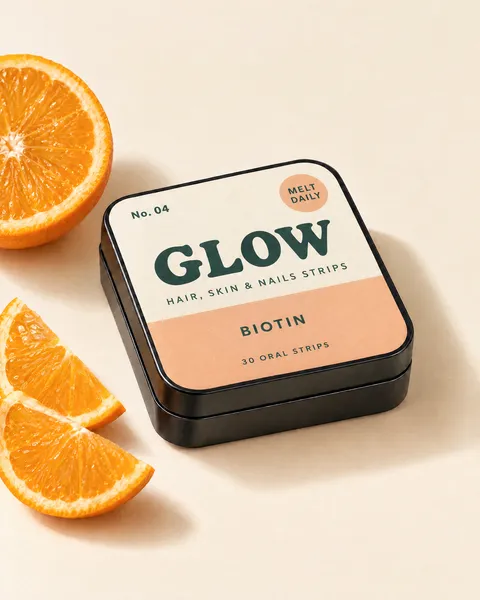
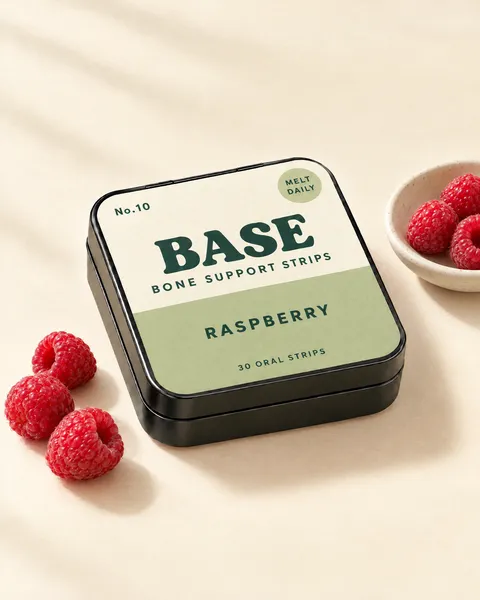
For ingredients that are effective in small amounts, a strip can hold a full serving. Vitamins measured in micrograms are a good example. Our GLOW strip carries 5000 mcg of biotin, 400 mcg DFE of folate and 20 mcg of vitamin D3, and our BASE strip carries 2000 IU of vitamin D3 with 120 mcg of vitamin K2. Each of those is a full labeled serving in a very small space.
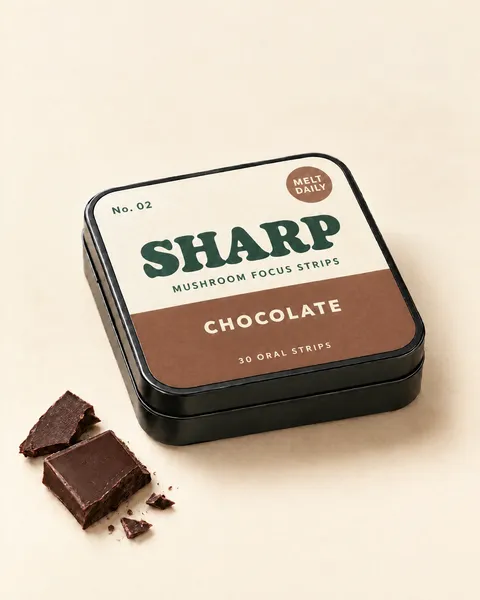
For ingredients usually taken in larger amounts, a strip carries less. Our SHARP strip has 30 mg of lion's mane, 25 mg of maitake, 25 mg of cordyceps and 20 mg of shiitake, and our DEW strip has 100 mg of collagen peptides. Many capsules and powders of those same ingredients contain considerably more per serving. If you are looking for a high amount of a single ingredient, a capsule or powder is likely the better fit, and we would rather you know that up front.
The simplest way to compare is to read the Supplement Facts panel on any product, strip or not. The amount per serving is right there, and every strip page on our site lists it.
Sugar, compared with gummies
Gummies are popular because they taste like candy, and many of them get that taste from sugar or syrups. If you are watching added sugar, it is worth reading the label on any gummy you buy.
Our strips are sweetened without sugar. The Other Ingredients on each tin list sweeteners such as monk fruit extract, steviol glycosides (from stevia), and sugar alcohols such as erythritol, mannitol or sorbitol, depending on the flavor. Because each strip is so small, the amount of sweetener in one is small too. Capsules, for their part, usually have no sweetener at all, so if you want nothing sweet in your routine, a plain capsule wins on that point.
Taste
A capsule has no taste, which is either a plus or a missed opportunity depending on how you look at it. A gummy tastes like fruit candy. A strip falls in between: it has a light flavor that melts away quickly. Our tins come in flavors like cranberry, chocolate, strawberry mint, orange, mango, mixed berry and raspberry.
Some ingredients have a natural taste that a flavor can soften but not completely hide. Mushroom extracts and some vitamins have an earthy or slightly bitter edge. If you are very sensitive to taste, a capsule may be easier.
Who each format suits
- Strips suit people who dislike swallowing pills, want something they can take anywhere without water, and are taking ingredients that work in small amounts.
- Capsules and tablets suit people who want larger amounts of an ingredient, want no flavor or sweetener, or are taking several things at once with a glass of water anyway.
- Gummies suit people who enjoy a treat-like routine and are comfortable with the sugar and chewing that usually come with it.
Plenty of people mix formats: a capsule with breakfast at home, and a strip in a pocket for the middle of the day. There is no rule that a routine has to be all one thing.
The bottom line
Strips are about ease. They are quick, they need no water, they fit in a pocket, and they carry no sugar. Their limit is size: a thin film simply cannot hold as much as a capsule. Read the Supplement Facts panel, decide which matters more for the ingredient you want, and choose the format you will actually keep taking. Follow the directions on the label, and with our strips that means one strip a day.
If you are pregnant, nursing, taking any medication or managing a health condition, check with your doctor or pharmacist before adding a supplement.
*These statements have not been evaluated by the Food and Drug Administration. These products are not intended to diagnose, treat, cure, or prevent any disease.